|
Charleston, South Carolina OFF THE BEATEN PATH Author: Barbara Hayo www.TrustedTours.com |


Go on the Gullah Tour of Charleston to experience the African influence on Lowcountry culture and traditions, told through folktales in Gullah, a lilting mix of the language of West Africa and English. Tour guide, Alphonso Brown, author of A Guide to Gullah Charleston, provides an unforgettable experience, concluding the tour at the home and forge of famed blacksmith, Philip Simmons , who carries on the heritage of his forbearers in the creation of many of Charleston's fine artistic gates.
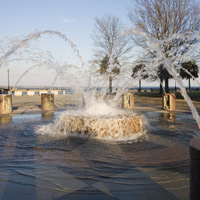
On the self-guided Gateway Walk, venture off the sidewalk to hidden places you might otherwise miss. Begin at St. Philip's Church, following the subtle markers for 4 blocks, enjoying the fountains, flowers and lacy wrought-iron gates through 4 churchyards, old cemeteries, and into the gardens of the Charleston Library Society and Gibbes Museum of Art. The delightful "nature trail," ends at the double-steepled Unitarian Church.
Enjoy a picnic under the shade of the 17,000 square foot canopy of the ancient 1400 year-old Angel Oak on Johns Island. The 65-foot live oak, native to the Lowcountry, is not very tall, but its canopy is enormous, with limbs as large as tree trunks, some reaching to the ground. Reportedly the oldest thing, living or man-made east of the Rockies, it has miraculously survived logging, development and hurricanes.
With all the fabulous mansions to see, you might miss the diminutive Thomas Elfe House at 54 Queen, open on a limited basis for tours. Built in 1760, it is one of the oldest remaining homes in Charleston. It was the home Thomas Elfe, the most acclaimed colonial era cabinetmaker, whose work can be seen in some of the house museums. Beautifully restored in 1970, it is a showcase of 18th and 19th century furnishings, and many elements of the house, mantels, cabinets and bookcases, are attributed to Elfe.
On weekends only, see one of the most interesting artifacts in naval warfare history resting in a tank of water in the Warren Lasch Conservation Center in North Charleston. The H. L. Hunley, a hand-cranked Confederate submarine lost after sinking a Union blockade ship on February 17, 1864, was discovered in mud on the ocean floor outside Charleston Harbor in 1995, and recovered with much fanfare and great difficulty in 2000. Today, archeologists are piecing together the mystery of its disappearance, confirming the long-romanticized fate of the heroic crew of eight.
Drive to Summerville, "Flowertown in the Pines," the retreat of early planter families escaping Lowcountry summer illnesses and Victorian-era wealthy looking for clean air to cure lung ailments. See old homes, beautifully landscaped, on pilings with large wrap-around porches to catch the health-giving breezes, or with Victorian gingerbread details. In the spring, the town is ablaze in the pink confetti of azaleas in full bloom.
Get a real sense of the importance of rice to the region at the Rice Museum in Georgetown, up US 17, an area where the land and water combined to make rice cultivation and the unique Lowcountry culture possible. Along the way, stop by Christ Episcopal Church, a small "chapel of ease," one of several such hidden jewels, dating to colonial times, used by planters unable to journey to Charleston for church services.

Trust us, we've been there!
www.trustedtours.com